Cats can be a bit of a mystery, right? Before jumping into training, it’s super important to get what makes them tick. Cats are natural hunters with instincts that play a big role in how they behave and respond to training.
Building a trusting bond with your cat is the secret sauce to successful training. Spend time playing, rewarding, and just hanging out with your feline buddy. This strengthens your relationship and sets the stage for effective learning.
There are lots of myths floating around about different cat breeds and how easily they can be trained. Some folks think only certain breeds are smart enough for training, but the truth is, every cat has potential. It’s more about understanding their unique personalities than anything else.
Reading a cat’s body language can really boost your training efforts. Watch for ear twitches, tail flicks, and those little vocal cues. They provide all kinds of hints about how your cat is feeling. Are they relaxed, curious, or maybe a bit stressed? This awareness helps tailor your approach and make training less stressful for both of you.
Fundamental Training Techniques for Cats: Starting Simple
Jumping straight into some training, remember that patience and consistency are your besties here. Cats might not always get things right away, but keep at it with a gentle approach. Every cat learns at their own pace, so hang tight.
Ever tried clicker training? It’s kinda awesome. This method is all about using a little clicking sound to signal to your cat that they’ve done something right. When they associate the click with a reward, they’re more likely to repeat the behavior. So, grab a clicker, some treats, and get going!
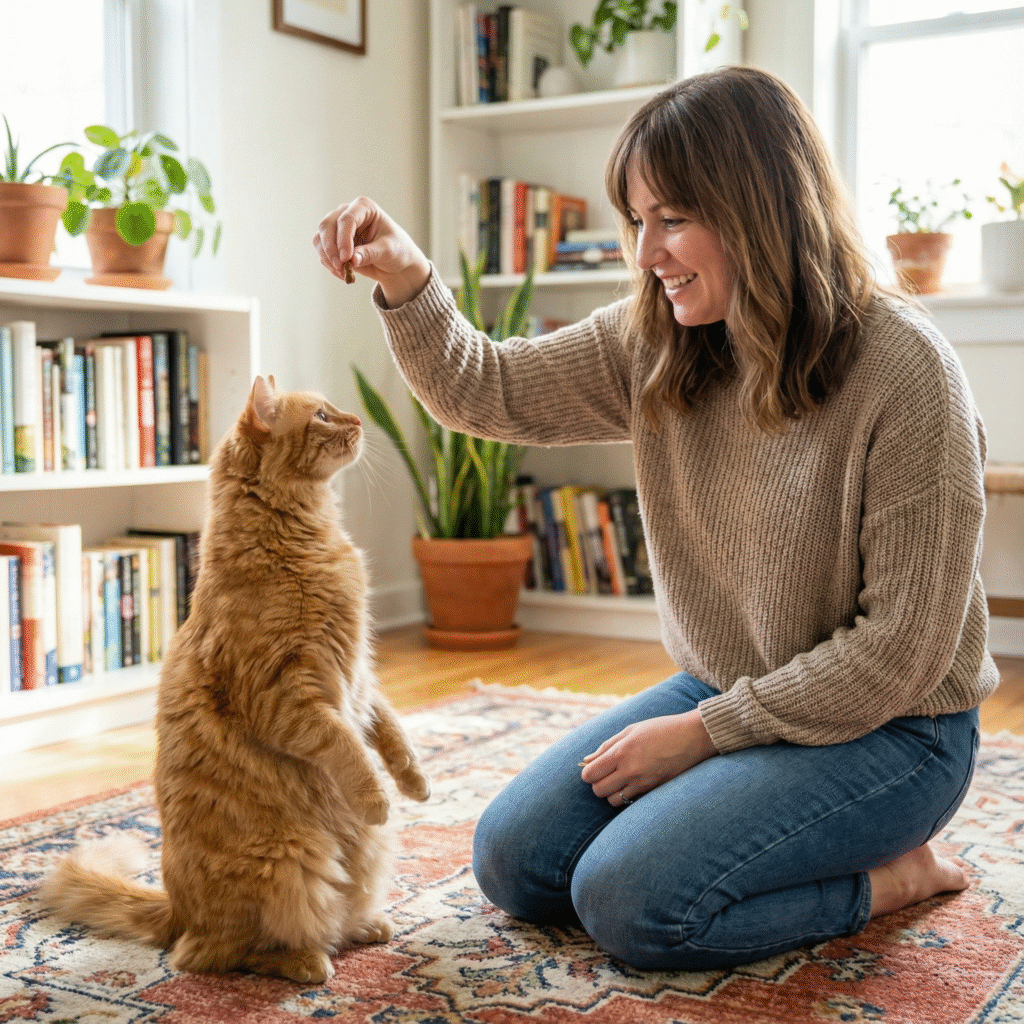
Treats are like magic in the world of cat training. Positive reinforcement is super effective, so keep those tasty rewards handy. Every time your furry friend follows a command or behaves well, toss them a treat. It turns training into a fun game rather than a chore.
Biting and scratching driving you up the wall? You’re not alone! These common issues can be tackled with redirects. Swap a scratch on the couch with a scratching post, or teach them that biting isn’t part of play. Reward them with affection or a snack when they choose the right option—it’s about showing them better alternatives.
Advanced Training: Encouraging Complex Behaviors
Once you’ve nailed the basics, it’s time for some advanced fun with your cat. Step up your training game with target training. It’s a nifty way to guide your cat to specific spots or get them to perform actions like spinning. All you need is a target stick and some treats. Simple as that!
Leash training might sound wild for a cat, but it’s totally do-able and opens up a world of exploration. Start with a comfy harness, let them get used to the feel indoors, and slowly introduce walks in a safe outdoor space. Remember, it’s all about baby steps and keeping things stress-free.
Teaching tricks like high fives or a sit command can be a blast. Keep training sessions short, around 10 minutes max, so your cat doesn’t lose interest. Use their favorite snack as a reward and keep things upbeat with lots of praise. These tricks not only impress your friends but also help keep kitty’s mind sharp.
Creating an enriching environment keeps your cat mentally stimulated and can make training even more effective. Think puzzle feeders, interactive toys, and plenty of vertical space to climb and observe. A happy, engaged cat is way more likely to be responsive during training sessions.
Overcoming Challenges: Navigating Cat Training with Patience
Training cats can sometimes feel like a rollercoaster ride. Expect a few bumps and hiccups along the way. When you hit a wall, take a breather, step back, and reassess your approach. Every cat is different, and what works for one might not work for another.
Empathy is your secret weapon during tough times in training. Cats have their off days too, just like us humans. By being understanding and patient, you help your cat relax and feel safe, which makes learning a lot easier.
Sometimes, traditional methods might not cut it. If you’re stuck, don’t hesitate to reach out for professional help. Cat behaviorists can offer fresh insights and tailor strategies perfectly suited to your furry friend.
Hearing about other successful cat training stories can be super motivating. Maybe a friend turned their chatterbox of a cat into a responsiveness champ, or you read about a timid kitty gaining confidence through clever tricks. These stories remind us that with patience, creativity, and maybe a little humor, breakthroughs are bound to happen.
Amazon Associate receives compensation on qualified purchases

This is a fantastic and surprisingly encouraging post on cat training! As a mom who is the reluctant owner of two cats (thanks to my daughter), I often feel like I’m serving them, not training them!
I’ve always viewed cats as independent spirits whose only goal in life is to sit exactly where they aren’t supposed to. But your emphasis on positive reinforcement and understanding the cat’s natural instincts makes so much sense.
We have 2 cats and I agree with you I think we are serving them at times . They are very independent and aloof and seem to stare at you wondering what your trying to get them to do, my granddaughter and my niece are cat lovers too. Thanks Much