What makes a miniature dachshund red (and what the color doesn’t change)
A miniature red dachshund is a miniature dachshund with a coat in the red range, from a deep mahogany to a lighter ginger. Some have scattered black hairs, especially on the ears and back, and the shade can differ between a smooth coat and a wirehaired one. Red is a coat color and nothing more.
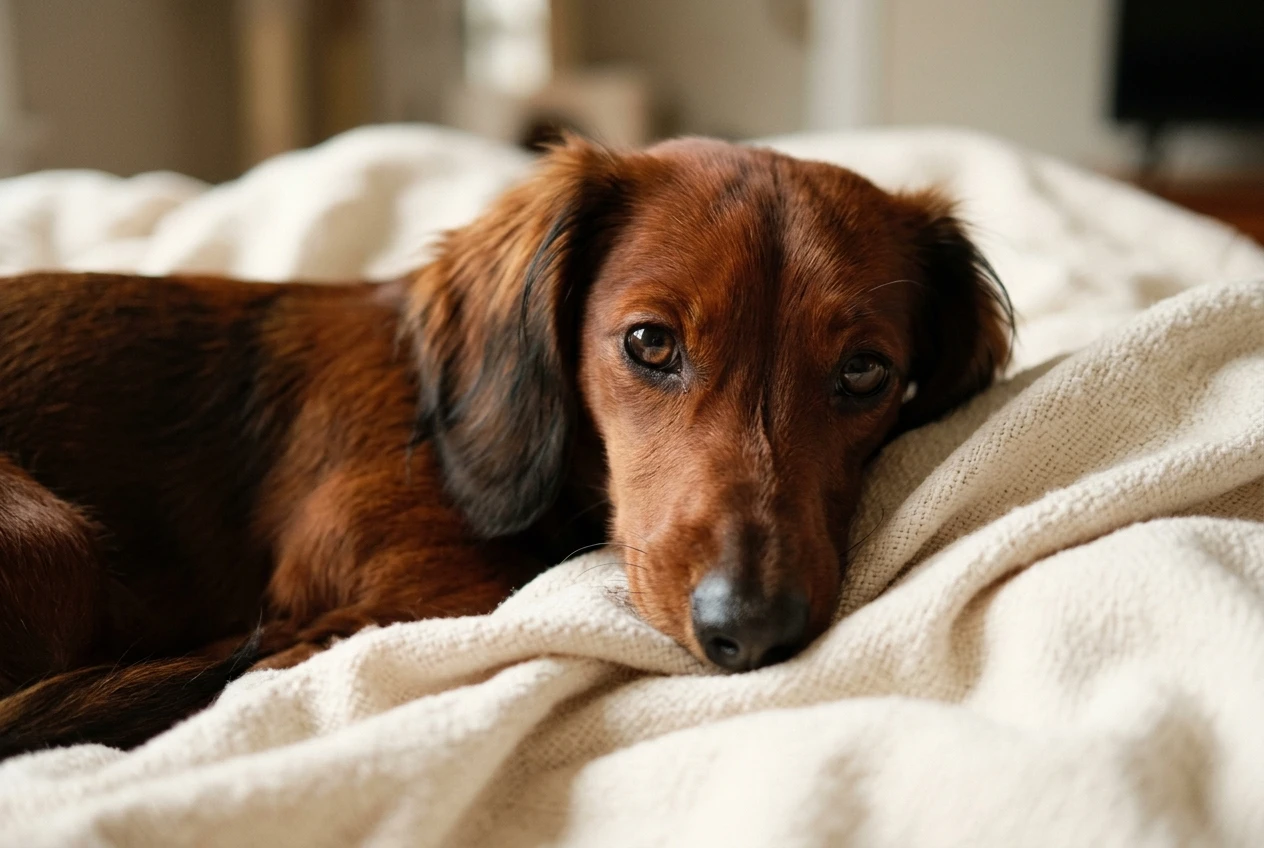
The color does not tell you about temperament, health, or how much exercise the dog needs. Those depend on the dog’s parents, its breeding lines, and how it is raised. If you are choosing between a red puppy and a black-and-tan one, choose the better-bred, healthier puppy and let color decide only after that.
Smooth, wirehaired or longhaired: how coat type affects care
Coat type affects your weekly routine far more than color does.
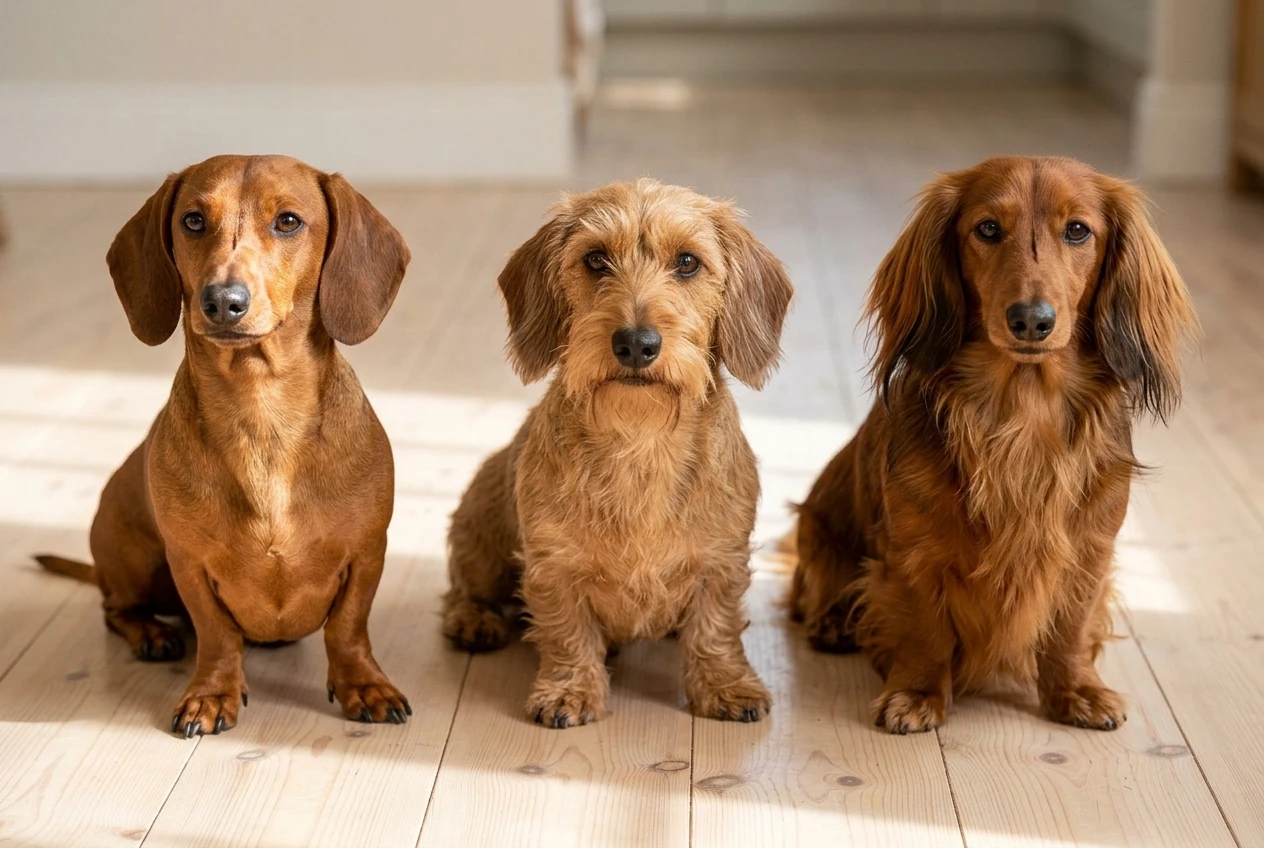
- Smooth: The shortest coat and the least work. A weekly brush with a soft brush or rubber mitt and a wipe-down after muddy walks is usually enough. Smooth dachshunds have little insulation, so many feel the cold quickly.
- Wirehaired: A coarse outer coat with a softer undercoat, plus a beard and eyebrows. It needs regular brushing, and the dead coat is usually removed by hand-stripping or clipping. The beard collects food and water, so it needs wiping.
- Longhaired: Silky, feathered hair on the ears, chest, legs and tail. It tangles easily behind the ears and under the legs, so plan on brushing several times a week.
Ask your breeder or a groomer what the specific puppy’s coat is likely to need, since individual coats vary.
Size and weight: what miniature really means
Miniature is a size variety within the dachshund breed, not a separate breed. In the United States, a miniature is generally described as 11 pounds or under at 12 months of age. Standards in other countries often measure chest circumference instead, so the definition depends on where you live and which registry your breeder follows.
A puppy sold as “mini” is not guaranteed to stay small. Look at the parents’ adult weights. Also be wary of anyone selling a “teacup” or “tiny” dachshund at a premium, because extreme smallness is not a recognized goal and is not a sign of quality.
Temperament at home: bold, stubborn and loyal
Dachshunds were bred to follow prey into burrows, and the personality shows it. They are confident, curious, and determined. Most bond closely with their people and may follow you from room to room.
They also have strong opinions. A dachshund that has smelled something interesting may ignore you completely, and many dig, burrow into blankets, and guard their favorite spot. Plan for a dog that wants to be part of the household and will test the rules.
Protecting that long back
The long spine and short legs are the breed’s best-known health concern. Dachshunds are prone to intervertebral disc disease (IVDD), where a spinal disc bulges or ruptures and can cause pain or weakness. Everyday habits can lower the strain on the back.
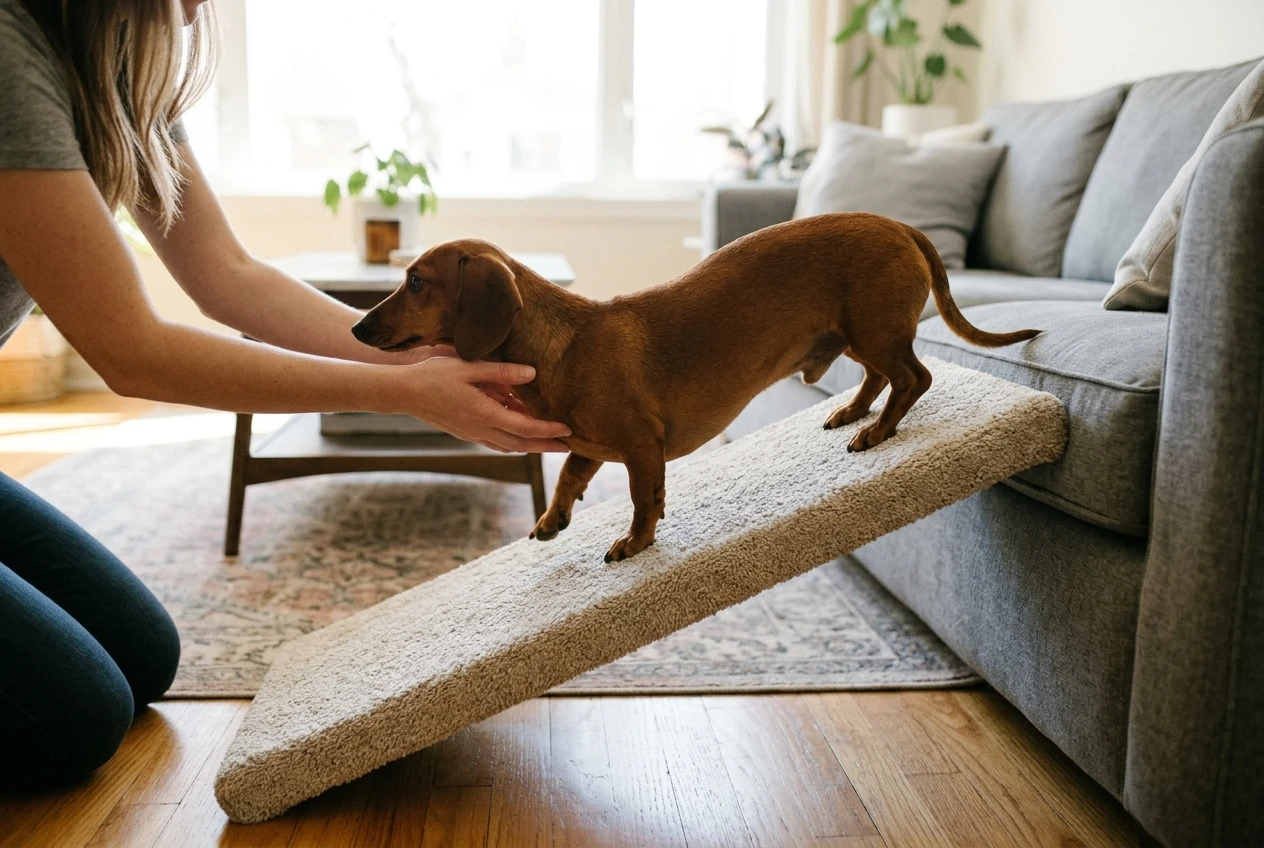
- Use ramps or pet steps for sofas and beds, and block access to long staircases where you can.
- Discourage jumping on and off furniture.
- Lift with one hand under the chest and the other supporting the hindquarters, so the body stays level.
- Keep the dog lean, since extra weight adds load to the spine.
- Use a harness rather than pulling on a collar.
Yelping when touched, reluctance to move, a hunched posture, or wobbly back legs need a vet’s attention the same day. Your vet can tell you how serious it is.
Exercise, training and the barking question
A miniature dachshund needs daily walks and some play, but not marathon sessions. Two or three moderate walks and a few minutes of sniffing games, such as hiding treats around the house, usually suit them better than hard running or repeated jumping.
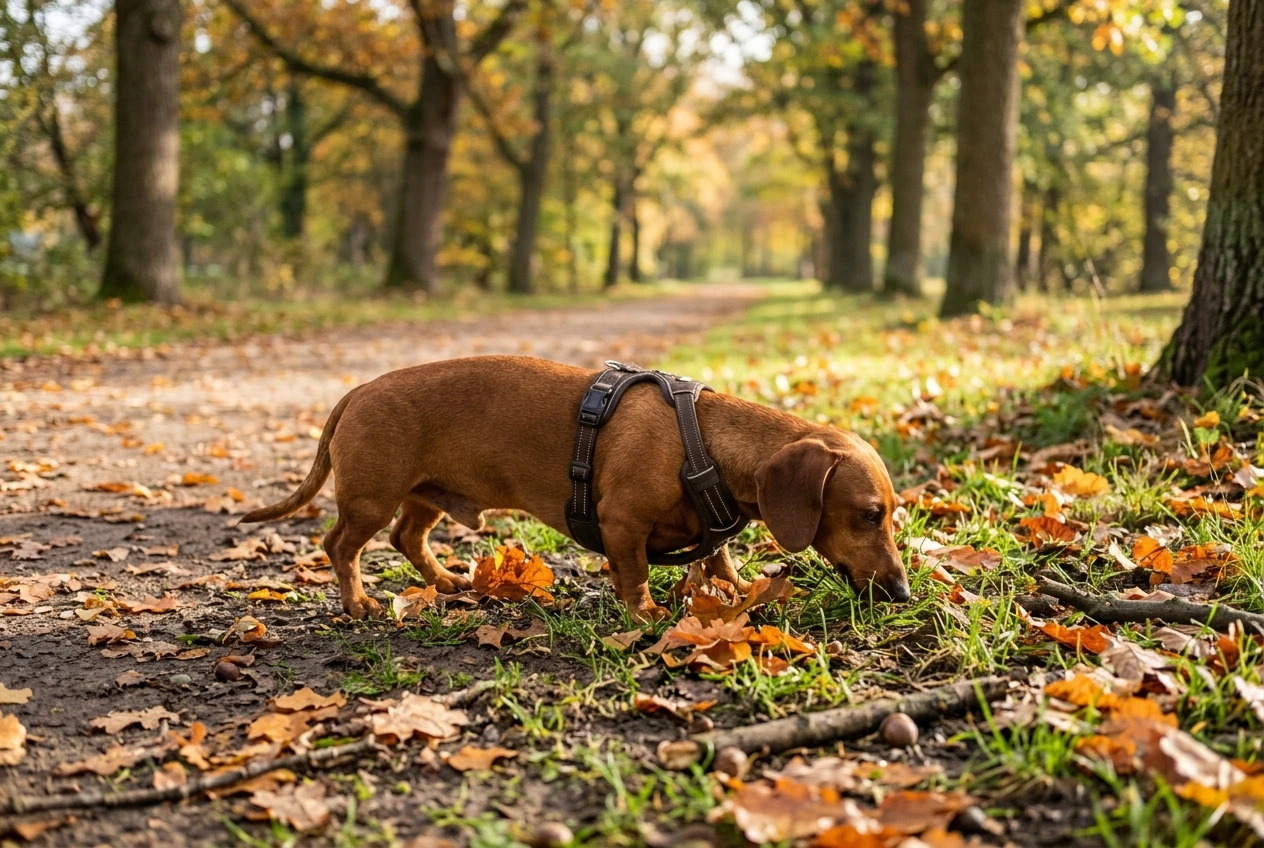
Train with short sessions and rewards, since harsh methods tend to make a stubborn dog more stubborn. House training can take longer than with some breeds, so be consistent with a schedule and praise.
Barking is common. Dachshunds often bark at the doorbell, passing dogs, and noises outside. You can reduce it with early training, such as rewarding quiet and teaching a settle cue, but you are unlikely to remove it. If you share walls with neighbors, think about this before you commit.
Choosing a puppy: questions to ask a breeder and red flags
Good questions to ask:
- What health testing have the parents had? Ask specifically about eye conditions and any back problems in the lines.
- Can I meet the mother, and see where the puppies are raised?
- What were the parents’ adult weights?
- What will the puppy have had by the time it comes home, such as vaccinations and vet checks?
- Will you take the dog back if I can no longer keep it?
Red flags include refusing to let you visit, several litters available at once, pressure to pay a deposit quickly, puppies sent home very young, no health information, and a price justified by color or “tiny” size rather than by the care behind the litter. A good breeder will ask you questions as well.
Is a miniature red dachshund right for your household?
This dog suits people who want a loyal, characterful companion and can accept some barking and stubbornness. It suits homes where the back can be protected: few unavoidable stairs, furniture with ramps, and adults or older children who handle the dog gently.
It is a harder fit for a household with long stretches of empty time, very young children who might pick the dog up carelessly, or a home with many steps and no way to manage them. If your routine and space match what the breed needs, the red coat is a pleasant extra.
Amazon Associates receive compensation for qualified purchases