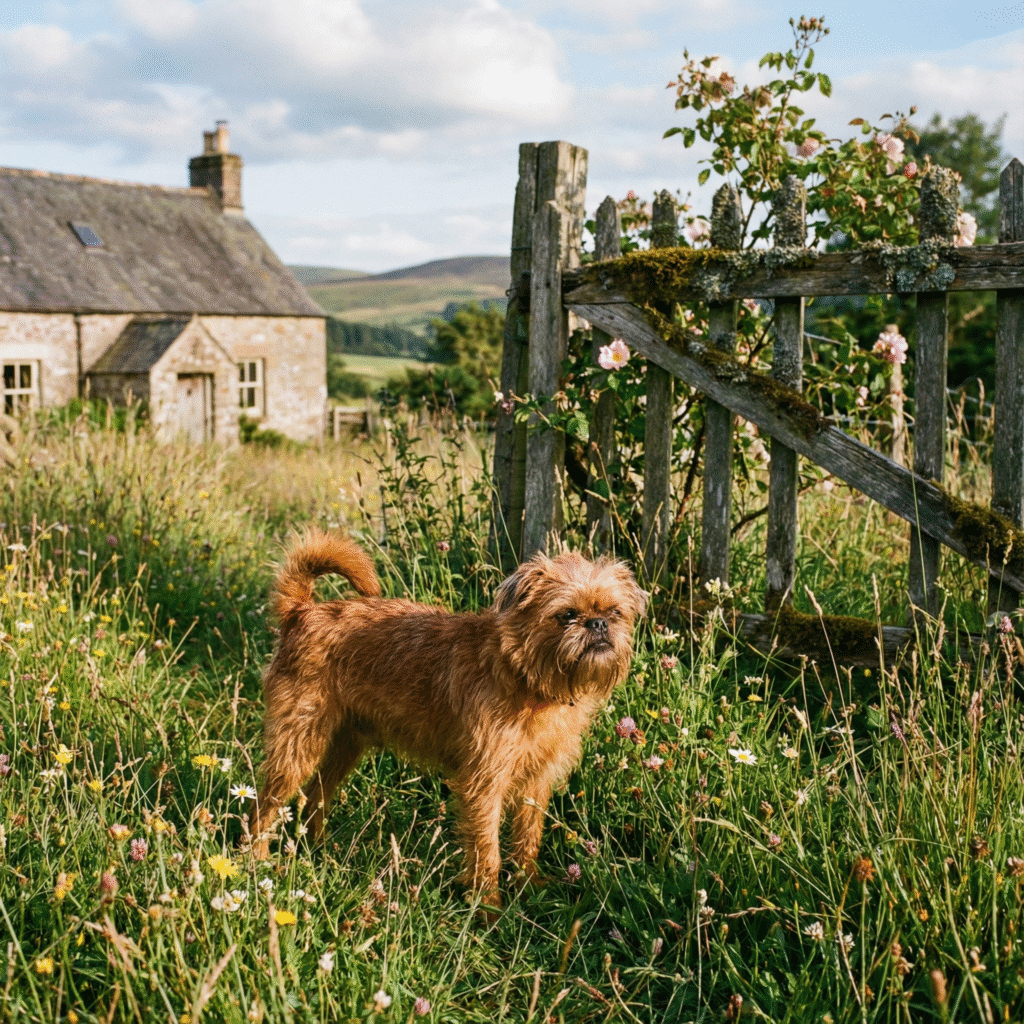
The journey of the Brussels Griffon starts way back in Belgium. These little charmers originally worked as rat catchers in stables, proving their smarts and agility from day one. With those roots, it’s no surprise they climbed their way to aristocrats’ laps and hearts, making them popular companion dogs in Europe.
A Brussels Griffon doesn’t just look like any other dog; its unique features are part of its charm. You’re looking at a canine with a flat face, soulful eyes that have a knack for expressing a full range of emotions, and a perky upturned nose. Whether rocking a rough coat that gives off a wise, worldly look or a smooth coat that screams sleek and sharp, these dogs stand out in a crowd.
The breed standard paints a picture of the perfect Brussels Griffon: small, square, and full of character. Typically weighing between 8 to 12 pounds, these dogs pack a lot of personality into their small frames. Their walks aren’t just a walk, it’s more of a strut with an air of confidence and curiosity. The rough-coat types have that characteristic scruffy charm, while the smooth-coats bring a different kind of elegance. Understanding these standards gives a glimpse into why they steal the show at dog competitions.
The Perfect Companion: Personality and Temperament
Imagine having a little shadow following you around the house—that’s your Brussels Griffon. They’re famously affectionate, often forming almost human-like attachments to their favorite person. If you’re their chosen one, get ready for tons of love and endless loyalty.
Socialization is key to raising a happy, confident Griffon. Regular interactions with different people, places, and pets keep them well-rounded and prevent unnecessary shyness or aggression. Puppy socialization classes can be a great start, and don’t forget to make these encounters fun and positive—they’ll love it and you’ll appreciate their easy-going nature later.
These dogs have brains as big as their hearts, making them curious and eager to learn. They enjoy puzzles, tricks, and any game that keeps their minds active, so puzzle toys or a homemade treasure hunt can be perfect activities. Skip the boredom and keep things fresh and exciting for them and you’ll have a content little companion.
Even with their intelligence, Brussels Griffons are not couch potatoes. They thrive with interactive play sessions and daily walks. This combo keeps their adventurous spirit and sharp mind in tip-top shape.
Caring for Your Brussels Griffon: Health and Nutrition
Brussels Griffons are generally healthy, but like all breeds, they are prone to specific health conditions. It helps to be aware of common issues such as hip dysplasia, luxating patellas, and eye disorders. Regular vet check-ups and screenings can catch these early, ensuring a long, happy life for your furry friend.
Feeding your Griffon right is crucial. Their diet should be high in quality proteins and fats, with controlled portions to prevent obesity—supporting their energy levels and overall health. Whether you opt for commercial dog food or a home-prepped diet, keeping it balanced and vet-approved is the way to go.
Grooming is another essential part of their care. For rough-coated Griffons, regular brushing keeps their coats free from mats and looking tidy, while smooth-coated types need occasional brushing to manage shedding. Regardless of coat type, basic grooming like bathing, nail trimming, and ear cleaning is necessary to keep your Griffon in prime condition.
Training Your Brussels Griffon: Ensuring a Harmonious Life Together
Starting your Brussels Griffon’s training early sets the foundation for good behavior. Puppy classes can be a lifesaver, teaching essential commands and social skills that will make life smoother for you both. Patience and perseverance go a long way, given their sometimes stubborn streak.
Consistency makes training effective. Positive reinforcement works wonders with these smart little dogs. Reward with treats and praises, and watch them pick up new tricks and commands faster than you’d expect. Creating a routine where rewards are given for good behavior reinforces the behaviors you want.
Behavioral challenges can pop up, but they’re manageable. If your Griffon turns into a bark machine or tends to get anxious when alone, address it promptly with training techniques tailored to their temperament. Toys that engage them mentally or leave them doggy puzzles when alone can help ease separation anxiety.
Encouraging good manners means reinforcement of behaviors rather than punishment. Respectful training builds trust and solidifies the bond you share with your Griffon, making your lives together not only easier but more joyful.